Our Directors
GYANG J. BOTSHA
Background and Early Career
Gyang believes in changing people’s lives for the better, building dreams, and achieving what others would call impossible. He is a strong proponent of teamwork, with everyone playing their roles and finishing all assigned targets in a timely and proper fashion.
He holds a National Diploma in Broadcast Journalism from the Nigeria Institute of Journalism, with additional diplomas in Film and Media Productions, Basic Education, Computer Applications, and CISCO CCNA Engineering.
Since 1986, Gyang has worked in the broadcast and educational industries, beginning as a Newscaster/Reporter with the Plateau Radio Television Corporation, Jos. In 1985, he pioneered Rwang Pam Memorial Schools in Bukuru, Jos South, and later founded Royal Priesthood International Schools in 2002 at Rayfield, Plateau State.
Professional Journey and Achievements
Over the years, Gyang has served in diverse roles across Nigeria. In 2007, he moved to Lagos as head of the ICT desk for Business Television, later joining the Money Show on AIT from the Nigerian Stock Exchange. By 2010, he was Media Manager for Blake & Harper Nigeria, producing documentaries, adverts, jingles, and political campaigns, including serving as Production Manager for Neighbour-2-Neighbour during the 2010–2014 National Campaigns.
He has also consulted for major events such as the African Fashion Reception Show in Paris (2015) and the NOA/Home of Arts International Exhibition tagged Nigeria in History. He pioneered Invicta 98.9FM Kaduna in 2016 and later rebranded Salama Radio 98.9FM Kafanchan.
In Jos, Gyang has been actively involved in educational and social projects, including consultancy for SUBEP on Girl Child Education, training for Operation Safe-School, mentoring graduates under The Next Economy (SOS Children’s Villages Nigeria), and facilitating entrepreneurship programs with GOPA/GIZ. In 2023, he served as a Media Monitor for the European Union during Nigeria’s General Elections and trained as a Certified Agropreneur under the ITF AgSEP program.
Life Goal and Personal Interests
Currently, Gyang is the Chief Executive Officer of Rwang Pam Memorial Schools, an Associate Pastor at Ignite House of Worship (JCMI), and an on-demand public speaker and trainer in Media, Science, and Education. He is PCM certified with strong leadership and project management skills.
Life Goal: Gyang’s greatest desire is to raise a generation of excellent, highly skilled, and motivated broadcast and educational professionals who uphold strong moral values and professional ethics.
Hobbies:
Playing Basketball
Writing Music and Singing
Reading and Research
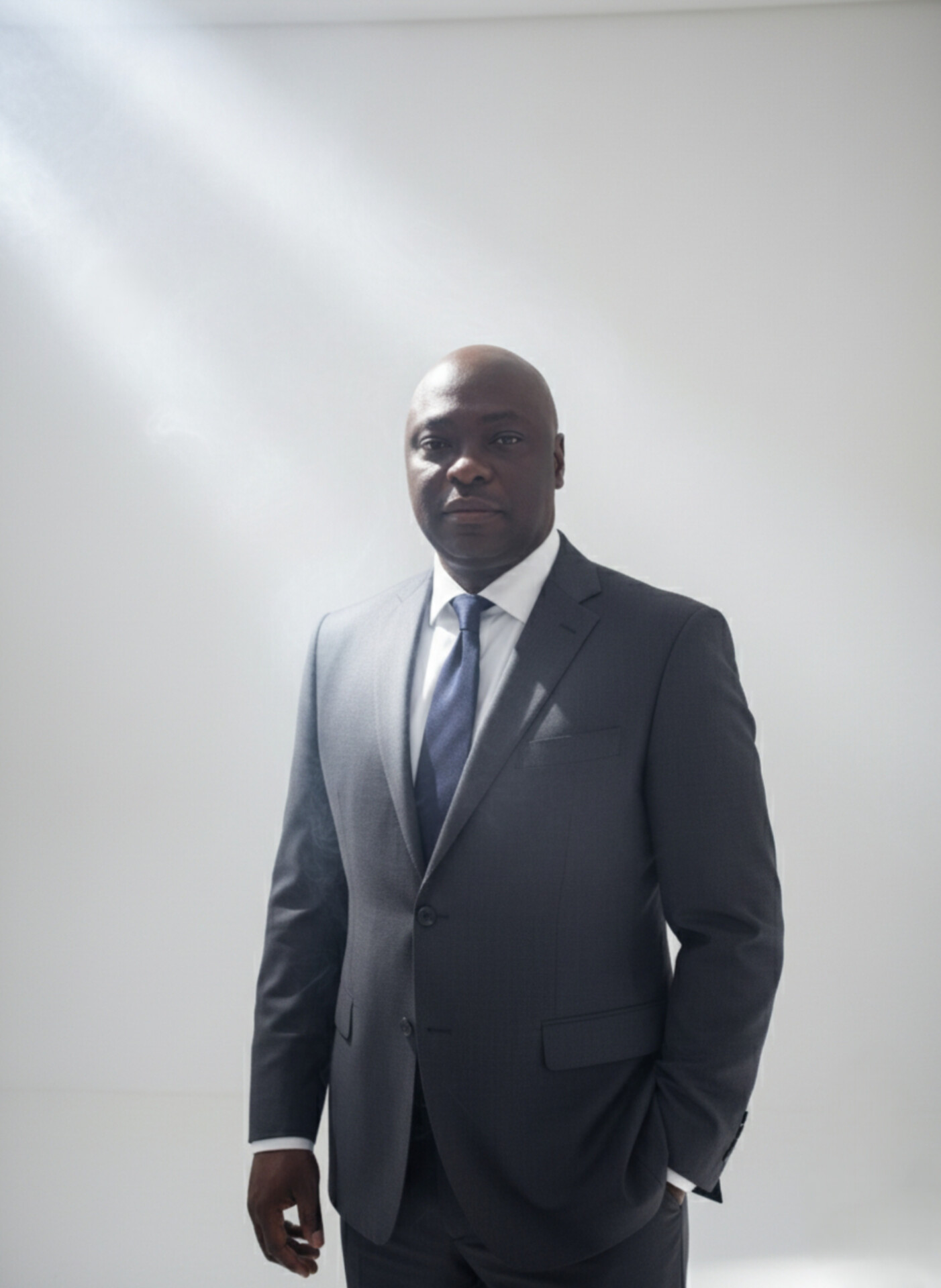
Its my utmost desire to raise a generation of excellent, highly skilled and motivated educational professionals who understand high moral standards and live by the best professional ethics
Gyang .J. Botsha — Director
RWANG PAM JR
Education and Teaching Career
Rwang Pam Jr is a graduate of Business Administration and Management, with Diplomas in Basic Computer Application, Music, and Theology. He has over three decades of experience as a classroom teacher in both regular and adult education.
Broadcasting and Media Consultancy
Since 1989, he has worked in the broadcast industry as an On-Air Personality, and since 2009 as a media consultant for GIZ. He specializes in issue-based, result-oriented, and audience-driven programming, training and mentoring partner stations.
Training, Research and Publications
Certified in CEFE (Competency-based Economies for the Formation of Enterprise), Rwang has trained both literate and non-literate groups across Plateau State. He coordinated farmers’ loan acquisition under the World Bank’s FADAMA II project, serves as National Secretary of Eden Group of Farmers Cooperative Society, and has authored and co-authored publications for GTZ/GIZ. He also developed financial literacy programmes such as Talk Moni and Darasin Kudi.
Rwang is experienced in project coordination, team management, and leadership, with proven skills in driving development-oriented initiatives.

I believe education is not just about knowledge, but about empowering people with the skills, values, and confidence to transform their communities and the world.
RWANG PAM JR — Director
HRH Da Rwang Pam Bogwom
HRH Da Rwang Pam Bogwom was the very first Gbong Gwom Jos, a respected leader known for his faith, wisdom, and courage. From humble beginnings, he rose to unite the Berom people and protect all who lived under his care. Though his life was cut short in 1969, his legacy lives on through the Rwang Pam Memorial Schools, established as a lasting extension of his vision and values.
Born in Du sometime in 1916, the young child, Rwang Pam Lo Bogwom was one of the 13 children who answered the Altar-call and gave his life to Christ when English Missionaries came in to Du from Foron and Riyom, to preach the word and convert the locals with a view to introducing the white man’s education to the land.
This paved the way for Rwang Pam and other children to be taken to Riyom to further their education.
There, the young Rwang Pam excelled as an upright and devoted Christian who saw and tried to model his life after King David in the Bible.
Before becoming a traditional ruler, HRH Da Rwang Pam Bogwom was a headmaster in Riyom, Plateau State; where he started as a teacher in the primary school. At that time, the Berom chiefs used to hold their meetings in Riyom and back then, because there was no one who could read and write among the chiefs, Mallam Rwang Pam, as he was called, was always invited by the chiefs to handle the position of their scribe, because headmasters, or generally, teachers at that time were highly respected.
At that time, the Beroms, who had a well-structured traditional leadership with their highest Traditional Priests occupying the position of their Highest Chief and Judge but with no colonially structured traditional headship.
This was during the colonial days when the British began to set their interest in setting up a government in Jos (then called Jishe by the Beroms). To authenticate their position and authority in Jos, they decided to appoint an indigene as chief for Jos.
So, the British inquired among the ruling Berom chiefs who among them would want to go to Jos and stay, but all of them declined, saying they would want to remain in their domains and could not leave their land. Thereafter, about three or four persons were picked in a preliminary selection including Da Rwang Pam, who was eventually elected among them to move to Jos and become the Very First Ruler of the unified Berom Nation.
Some of the reasons for his selection were: he was from Du District, a devoted Christian, a husband of one wife, did not drink or smoke, was a disciplined and morally upright man, stood for justice, and was the most learned among them all. This was unanimously accepted by the chiefs.
The colonial authorities then notified the chiefs that Mallam Rwang Pam whom they had all accepted to be the chief of Jos would be given a title, a condition that was also accepted by all the Berom chiefs.
So, Mallam Rwang Pam moved to set up the First Berom Traditional Council and Palace in Jos in the year 1947 after his appointment as head of the chiefdom was approved by the colonialists. At that time, there was no palace for him to stay in Jos because he was the pioneer chief, so he was given a garage that was demarcated and modified around the Jos Native Authority office near old Bukuru Park to manage, before the colonial authorities later erected a place for him at the present Jos North Local Government Secretariat.
He was consequently given a Staff of Office and installed as a 3rd class hereditary chief. He was designated as the Sarkin Jos in Hausa and Gbong Gwom Jos in Berom. That title remained until the late Chief Solomon Lar, then governor of Plateau State, ordered all traditional rulers to adopt indigenous titles. His title was immediately changed to Gbong Gwom Jos, meaning Paramount Chief, and he was upgraded to a second-class status before the title was eventually lifted to first class.
After the 1966 military coup, which ignited a geopolitical divide, there was the clamour between 1967/1968 for all southerners living in the north to vacate and relocate to their place of origin. At that time, HRH Da Rwang Pam, who was the paramount chief of Jos, physically mounted a Ministry of Information Landrover with a driver, took a loudspeaker and went round the whole of Jos, announcing that nobody should go anywhere and there should be no single bloodshed in his domain.
He said everybody should remain calm, that he didn’t want any disturbance. He made sure that no southerner was hurt, although there were some few unavoidable instances. He ensured that every Igbo man was taken to the railway station amid tight security and transported safely to the east. For southerners going by road, he made sure security men escorted them to the Plateau boundary.
There wasn’t much bloodshed in Jos or in other areas of Plateau. During the civil war, the late Ojukwu (Chukwuemeka Odumegwu) heard of what HRH Da Rwang Pam did and said this man must be respected. While many Easterners who were leaving Jos handed over their properties to locals to hold in trust, many of them recovered those properties after the war because HRH Da Rwang Pam ensured they were returned.
Later during the war, HRH Da Rwang Pam Bogwom became mysteriously ill and it was later discovered that he was poisoned, though nobody could tell who did it. He developed a mysterious illness like hypertension, but doctors could not find anything wrong with him. This caused him and the royal family great pain and suffering until his death in 1969.
His first-born son, Prince Bitrus, a prominent politician and Commissioner for Health under Governor Joseph Gomwalk, also fell to the same mysterious poisoning. He died and was buried just two weeks before his father. Prince Bitrus Rwang Pam died on June 30, 1969 while HRH Da Rwang Pam Bogwom died on July 14, 1969. It was suspected that this was a conspiracy from powerful persons in the Federal Government because HRH had refused to convert to Islam and for the role he played during the civil war.
At his death, HRH Da Rwang Pam Bogwom was survived by his wife, Queen Kaneng Pwang Pam, and ten children (excluding Prince Bitrus who died two weeks earlier):
Prince Bitrus Rwang Pam
Princess Vou Bitrus Pam
Princess Chundung Dung Ballang
Princess Hwonghei Moris Davou
Princess Kangyang Choji Zang
Princess Yop Esther Rwang Pam (Formerly Bulus G. Botsha)
Princess Kachollom Agwom Reng
Prince Pam Rwang Pam
Princess Phwachom Zi
Prince Davou Rwang Pam
Prince Chuwang Rwang Pam
Over 16 years later, one of HRH Da Rwang Pam Bogwom’s beloved daughters, Princess Yop Esther Rwang-Pam, who had spent her life fighting for the honour of her late father, established RWANG-PAM MEMORIAL SCHOOLS as a legacy in his honour. In September of 1985, RWANG-PAM MEMORIAL SCHOOLS was born at No. 11, Shen Road (now No. 3, Rwang Pam Street), Rahwol Kanang, Bukuru, Du District, in Jos South Local Government Area, Plateau State.